What if farmers were paid for biodiversity results rather than following a checklist?
Agri-environmental schemes often work by prescribing specific actions: mow after a particular date, avoid fertiliser on a certain field, follow a defined management practice.
In the species-rich grasslands of Őrség in western Hungary, a pilot developed through the EU-funded Contracts2.0 project explored a different approach.
Instead of rewarding farmers primarily for carrying out predetermined actions, the initiative co-designed a results-based agri-environmental payment scheme in which support would be linked more directly to measurable biodiversity outcomes.
But the experiment soon revealed that changing how payments work is only part of the challenge.
For a results-based system to function, farmers need indicators they can understand and monitor themselves. Conservationists need confidence in the information being collected. Policymakers need a system they can administer. And all of them need enough trust to work together.
That combination is what makes the Őrség initiative a particularly valuable seed case for DAISY.
About DAISY
DAISY — DigitAl, technologIcal and Social innovation mixes enabling transformation for biodiversity and equitY — is a Horizon Europe research and innovation project investigating how different forms of innovation can contribute to transformative change.
Rather than assuming that a new policy instrument or digital tool will create change on its own, DAISY examines how technologies, institutions, social relationships, incentives and everyday practices interact.
Through its seed case studies, the project looks for Transformative Intervention Mixes (TIMs): combinations of interventions that can reinforce one another and help promising innovations move beyond isolated experiments.
The Őrség case makes this especially clear. Its most important innovation may not be a payment formula or an app, but the way farmers, conservationists, researchers and policymakers began learning how to work together differently.
Paying for outcomes instead of actions
The idea behind results-based agri-environmental payments is relatively simple.
Instead of paying farmers for carrying out a prescribed action, payments are connected to the ecological condition or biodiversity outcome achieved on the land.
In Őrség, this meant exploring whether farmers managing species-rich grasslands could work with relatively simple biodiversity indicators rather than relying entirely on external inspections or complicated scientific monitoring.
The monitoring approach developed through the project was deliberately low-tech and farmer-friendly. It was tested jointly in the field and designed around indicators that farmers could realistically recognise and use.
This mattered because results-based schemes shift some responsibility from regulators towards farmers themselves.
For that shift to work, farmers need to understand what is being measured, believe the indicators are meaningful and feel that their own knowledge is respected.
The goal was therefore not only to design a new payment mechanism. It was to develop a system based on motivation, local knowledge and shared ecological objectives.
Four years of learning how to work together
Behind the technical design was a much longer social process.
Four years of EU research funding supported workshops, field visits, joint monitoring trials and a study trip to Austria, where participants could see related approaches in practice.
The project also created a local Innovation Lab and a national Policy Lab, providing spaces where farmers, conservation professionals, researchers and policymakers could meet and discuss how a results-based system might work.
This was particularly important in Őrség because cooperation did not begin from a position of strong trust.
The Őrség National Park Directorate has historically occupied a difficult dual role: it is both a conservation partner and a regulatory authority. That has contributed to tensions with farmers.
The participatory process helped change that relationship.
By testing monitoring methods together, discussing problems openly and treating farmers’ knowledge as relevant to the design of the scheme, the project created what the DAISY case study describes as an unprecedented level of trust between the national park and the farming community.
That is a significant outcome in its own right.
What changed — and what did not
The pilot did not lead directly to a new regional results-based payment programme.
In fact, no regional pilot has yet been launched.
But that does not mean the process produced no lasting change.
The initiative strengthened relationships between farmers and conservationists, improved digital and participatory skills, created new connections between institutions and produced a well-tested monitoring approach that could be reactivated when a suitable policy opportunity emerges.
Results-based thinking has also begun appearing beyond the original case: a recent national call related to water management has incorporated elements of a results-based logic.
These developments point to an important distinction.
A seed innovation does not need to transform an entire policy system immediately in order to create the conditions for future change. Sometimes its most important contribution is building knowledge, relationships and institutional capacity that remain available when the political window opens.
Why did the scheme not scale?
The main barriers were less technical than institutional.
The pilot reached an awkward point in Hungary’s Common Agricultural Policy funding cycle, leaving too little time to develop it into a larger regional programme.
Results-based payments are also still perceived as relatively novel and financially risky within Hungary’s legal and administrative framework.
At ministry level, political support was not sufficiently sustained, and turnover among key staff weakened continuity.
Local conditions create additional challenges.
The farming population in Őrség is ageing, animal husbandry is declining and levels of digital confidence differ considerably between farmers. The region is also relatively small and distinctive, making it difficult to assume that a model developed there could simply be copied elsewhere.
These obstacles show why a technically workable intervention can still struggle to become embedded in policy.
Transformation depends not only on whether an idea works, but on whether institutions are prepared and able to carry it forward.
Where digital technology could help
Digitalisation remains part of the future potential of the initiative, but it is important to distinguish that future from what the pilot has already achieved.
The monitoring system tested in Őrség was intentionally simple and low-tech.
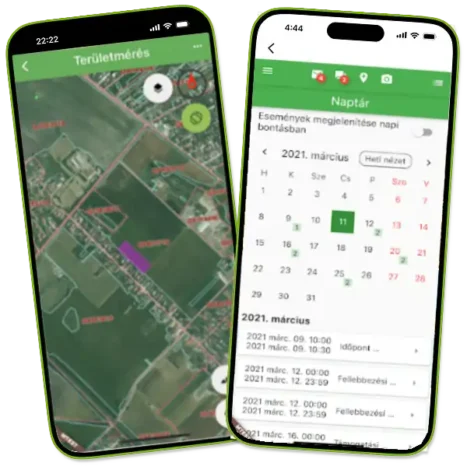
Hungary’s Mobilgazda app, operated by the Hungarian State Treasury, already supports farmers with administrative tasks. DAISY identifies a future possibility in extending tools such as Mobilgazda so that farmers could also monitor biodiversity impacts through the same digital environment they use for everyday farm administration.
In such a system, farmer observations could be combined with digital tools, and potentially with remote sensing or other monitoring technologies.
But technology would complement rather than replace farmers’ knowledge.
The lesson from Őrség is precisely that monitoring becomes useful when farmers understand it, trust it and can integrate it into their everyday relationship with the land.
From inspection towards mentoring
One of the most interesting possibilities emerging from the case is a different relationship between farmers and conservation professionals.
Traditional agri-environmental systems can position the two sides in an inspection relationship: one manages the land, while the other checks whether rules have been followed.
A results-based system can create room for something closer to mentoring and joint learning.
Conservationists can help farmers understand ecological indicators and explore how management decisions affect biodiversity. Farmers, in turn, contribute detailed knowledge of their land and the practical realities of agricultural management.
Over time, this can shift the conversation from compliance towards shared responsibility for ecological outcomes.
DAISY identifies this personal and relational dimension as an important part of the initiative’s transformation potential.
What could a wider results-based system look like?
The longer-term vision goes beyond reproducing the Őrség experiment exactly as it was.
Rather than one centrally designed scheme being applied identically everywhere, results-based approaches could be developed through regional programmes adapted to different ecological and farming contexts.
They could complement conventional action-based payments rather than necessarily replacing them.
Participatory design would remain important, allowing farmers and local conservation actors to help shape indicators and monitoring practices.
Simple and transparent scoring systems could make it clear how ecological results translate into payments. Minimum thresholds could provide security, while additional rewards could encourage progressive improvements in biodiversity outcomes.
Peer learning could also become a normal part of agri-environmental policy.
Farm schools, field visits, mentoring and communities of practice could give farmers opportunities to learn from one another rather than relying entirely on top-down guidance.
Such a system would require investment not only in farmers, but also in advisors, conservationists and public officials who need the skills and institutional capacity to operate it.
Trust is part of the infrastructure
 The Őrség case demonstrates why changing agri-environmental policy is not simply a matter of designing a better subsidy.
A results-based payment can create different incentives. Simple monitoring can give farmers a more active role. Digital tools may eventually make that monitoring easier to integrate into everyday agricultural administration.
But none of those elements works particularly well without trust.
The four-year participatory process in Őrség created something that cannot easily be installed through regulation or downloaded as an app: a working relationship between people who had previously approached one another with considerable scepticism.
That social infrastructure may ultimately prove as important as the technical infrastructure.
For DAISY, this is where the broader transformative potential of the case lies.
The initiative has not yet transformed Hungary’s agri-environmental policy. But it has shown that farmers and conservationists can jointly develop practical biodiversity indicators, that results-based approaches can become credible to initially sceptical participants, and that collaborative relationships can survive beyond the project that created them.
Transformation may therefore depend on a mix: results-based incentives, simple monitoring, participatory governance, institutional continuity, capacity building and long-term relationships of trust.
The Őrség experience suggests that changing what farmers are paid for matters.
Changing how farmers, conservationists and institutions work together may matter just as much.
The case study was researched by Kármen Czett, Eszter Kelemen and Gergő Berta of ESSRG as part of DAISY’s work investigating seeds of transformative change.
Want to explore the drivers, barriers and transformation potential in more detail?
Explore the complete Hungarian results-based agri-environmental seed case study on mydaisy.eu