When noticing nature becomes a form of participation
What happens when everyday observations of plants, insects, birds and other species become part of a shared picture of local biodiversity?
Across Coventry, Warwickshire and Solihull in the UK, the City Nature Challenge encourages people to go outdoors, notice the wildlife around them and record what they find using the iNaturalist app.
What may appear to be a simple digital activity can do much more than generate species records. It can help people develop ecological knowledge, discover local green spaces, connect with other participants and build stronger relationships with the nature around them.
That potential is why the Coventry-Warwickshire-Solihull City Nature Challenge has become one of DAISY’s seed innovation case studies.
About DAISY
 DAISY — DigitAl, technologIcal and Social innovation mixes enabling transformation for biodiversity and equitY — is a Horizon Europe research and innovation project exploring how different kinds of innovation can contribute to transformative change.
Rather than treating technology as a solution in itself, DAISY investigates how digital tools interact with people, institutions, communities, education, governance and everyday practices.
The project is particularly interested in Transformative Intervention Mixes (TIMs): combinations of technological, social, educational and organisational interventions that can reinforce one another and help promising innovations move beyond isolated experiments.
The City Nature Challenge offers a valuable case because its potential lies not simply in the app, but in the relationships and activities that develop around it.
From a global competition to a regional citizen science initiative
The City Nature Challenge began in 2016 as a friendly competition between Los Angeles and San Francisco, encouraging residents to document urban biodiversity.
It has since developed into an annual global citizen science event in which cities and regions around the world record and celebrate their local wildlife.
In Coventry, Warwickshire and Solihull, the story began in 2021 with a small bioblitz organised by a handful of Coventry City Council staff. It subsequently developed into a broader regional initiative involving landscapes ranging from Coventry’s urban green spaces to the woodlands and grasslands of Warwickshire.
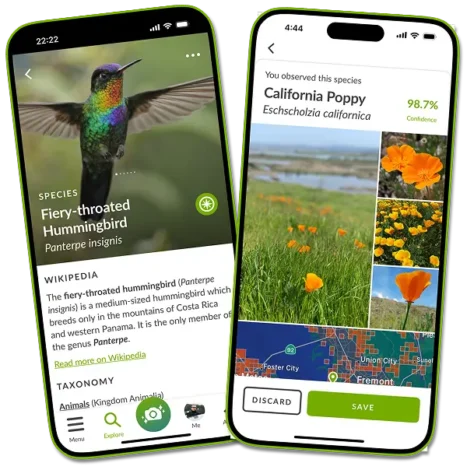 Using the free iNaturalist app, participants can upload observations and contribute to an openly accessible global biodiversity dataset.
Several factors help make participation attractive. The app is relatively intuitive and provides AI-assisted species identification. The international challenge introduces leaderboards, rankings and friendly competition, while the shared timing of the global event creates a sense of taking part in something larger.
Yet competition is only one motivation.
Some participants want to outperform neighbouring cities. Others simply enjoy exploring nature, learning the names of species or spending time outdoors with their children.
Behind the technology, local organisers also play a crucial role. Councils, wildlife trusts, universities and charities help promote activities, engage communities and share the organisational work needed to keep the initiative running.
The challenge is not simply collecting more data
The case also reveals the limitations of app-based citizen science.
Local authorities have limited staff time and resources for outreach, running diverse events and maintaining engagement throughout the year. The City Nature Challenge also takes place globally in late April, which can coincide with UK school holidays and poor weather, making participation more difficult for schools, families and other groups.
Inclusivity remains another challenge.
Like many citizen science initiatives, the challenge tends to attract people who are already interested in nature. Communities that have traditionally been less represented in citizen science or have fewer opportunities to engage with nature can therefore remain underrepresented.
There are tensions around the technology and the data as well.
Some experienced naturalists remain sceptical about observations based on casual or AI-assisted identifications. At the same time, gamification can influence what people record. When participants focus on increasing observation counts, for example, they may record cultivated plants rather than wild species.
These tensions matter because they demonstrate an important distinction: more observations do not automatically mean greater ecological or social transformation.
From an annual challenge to an everyday relationship with nature
DAISY’s desired future goes considerably further than simply making the annual City Nature Challenge bigger.
In that future, biodiversity recording becomes part of everyday community life rather than an activity concentrated around one event each year.
Local groups organise seasonal and year-round activities. People develop greater pride in the biodiversity around them and increasingly exchange ecological knowledge. Recording nature becomes connected with stewardship and care for local places.
Schools are particularly important.
Biodiversity observation could become part of classroom activities, homework and broader environmental education, allowing ecological literacy to develop from an early age.
Universities, local authorities, wildlife organisations, museums, media organisations and community groups could meanwhile form a stronger collaborative ecosystem around local biodiversity.
The annual City Nature Challenge would remain an important moment, but it would act as a gateway to a much wider culture of ecological awareness and participation.
Data as a tool for local empowerment
In this future, citizen science would not only produce information for scientists or public authorities.
Biodiversity data could also help communities understand how their environment is changing, advocate for places they value and take greater ownership of their local surroundings.
For local authorities, the information could increasingly support conservation and planning decisions. Stronger links could also be developed with wider initiatives such as Nature Towns and Cities, creating new opportunities for community participation in local nature recovery.
The objective is therefore not simply to collect a larger volume of data.
It is to make biodiversity knowledge visible, meaningful and useful to the people and institutions who can act on it.
Technology can help — but it cannot do this alone
Digital innovation can support this transition in several ways.
Better interoperability between biodiversity platforms could make information easier to share and use. Improved AI-assisted identification, audio and video recording and automation could expand what participants are able to document.
Apps could also become more accessible, reducing barriers for people who currently find biodiversity-recording technology difficult to use.
Digital tools could be combined with QR-linked biodiversity maps, public displays and potentially augmented-reality experiences, making local nature more visible in everyday public spaces.
But these technologies would need to develop alongside social and educational interventions.
Media campaigns, locally rooted storytelling, public biodiversity activities and carefully designed gamification could encourage participation and strengthen people’s emotional connection with place.
Most importantly, people need to see what happens to the information they contribute.
Visible feedback showing how biodiversity data informs conservation, planning or community action can help turn participation from a one-off digital interaction into a meaningful relationship with local nature.
Transformation comes from the mix
The Coventry-Warwickshire-Solihull case illustrates a central idea behind DAISY’s research: the transformative innovation is not the app alone.
Technology that simply makes existing recording practices faster or more efficient may leave the wider system largely unchanged.
The greater potential appears when digital tools are combined with education, community leadership, accessibility, cross-sector collaboration and opportunities for people to see how their contribution makes a difference.
The City Nature Challenge has not yet created that systemic transformation. But its continued development and the collaboration between councils, universities, wildlife organisations, charities and communities provide a foundation from which broader change could emerge.
Moving from an annual recording challenge towards year-round participation could help ecological literacy, citizen science and community stewardship become more deeply embedded in everyday life.
And that is where the initiative’s transformative potential lies: not simply in helping people identify more species, but in changing how communities notice, understand, value and ultimately act for the nature around them.