DAISY has spent its latest research phase building a resource for exactly that challenge: a framework and a growing, searchable catalogue of more than 50 real-world cases showing how transformative change actually happens through different combinations of interventions. We’re sharing it here because we think it belongs on the desk of anyone designing, coordinating, or evaluating a project like ours. And we’re asking for something in return: if you’re running an initiative that belongs in this picture, help us add it.
Why a Single Intervention Rarely Moves the Needle
Biodiversity loss, like most systemic problems our projects are funded to address, is driven by interconnected social, economic, political, and behavioural factors. Yet interventions are still too often designed in isolation. One regulation, one awareness campaign, or one new technology is launched on its own and expected to shift an entire system.
DAISY’s research points to a more useful starting question, one that is probably familiar from your own project design conversations: not “which intervention?” but “which mix, for which context, involving which actors?”
The Transformative Intervention Mixes (TIMs) Framework
To answer that question, DAISY developed the Transformative Intervention Mixes (TIMs) framework, which identifies four features shared by interventions that can collectively contribute to transformative change:
- Multiple interventions: Regulatory, economic, educational, technological, and other measures are combined rather than deployed alone.
- Multiple actors: Governments, businesses, researchers, civil society, and the public each carry part of the change.
- Multiple scales: Local, regional, national, and international actions reinforce rather than undercut one another.
- Multiple dimensions: Behavioural, social, economic, technological, and governance factors are addressed together.
If your own project logic model already wrestles with these tensions, you are exactly the audience this framework was built for.
A Catalogue Built for People Designing Interventions, Not Just Reading About Them
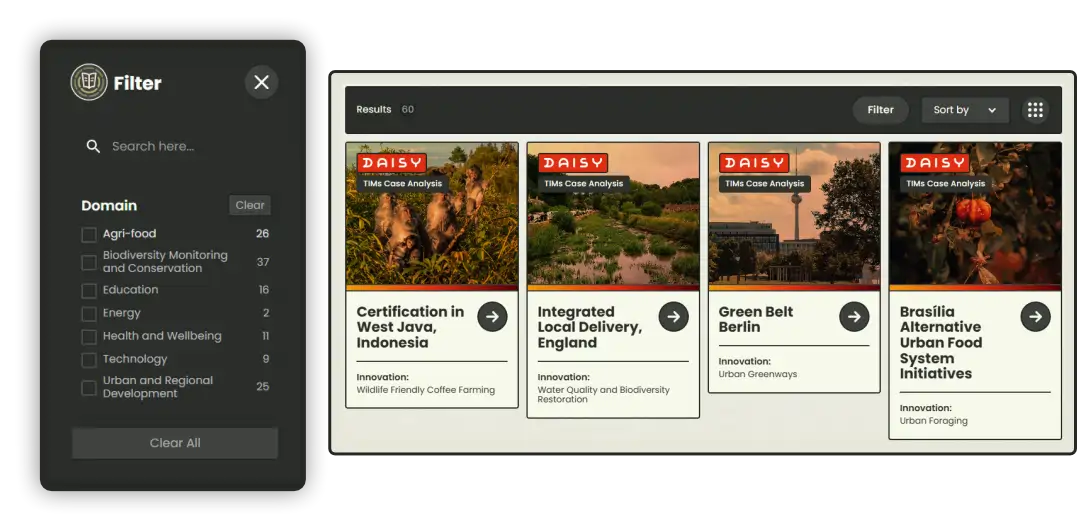
The framework is paired with a living catalogue of more than 50 documented cases spanning agri-food, energy, education, urban and regional development, biodiversity monitoring and conservation, health and wellbeing, and technology. Each case is broken down into the elements a project team actually needs when planning its next move:
- the intervention mix applied
- the barriers and enabling conditions encountered by the project
- the transformative mechanisms at work
- opportunities for scaling the approach further
You can filter the catalogue by domain on the Care-full Transformation Platform (care-full-courses.com/see) and read the full research behind it in DAISY’s D3.1 report. It is designed to save project leads the work of reconstructing from scratch which combinations of policy, incentives, technology, and community engagement have already been tried, as well as what got in the way.
Now We’d Like to Add Your Project to It
A catalogue like this is only as useful as it is comprehensive, and we know there are transformative initiatives out there that we simply haven’t found yet. Yours may well be one of them.
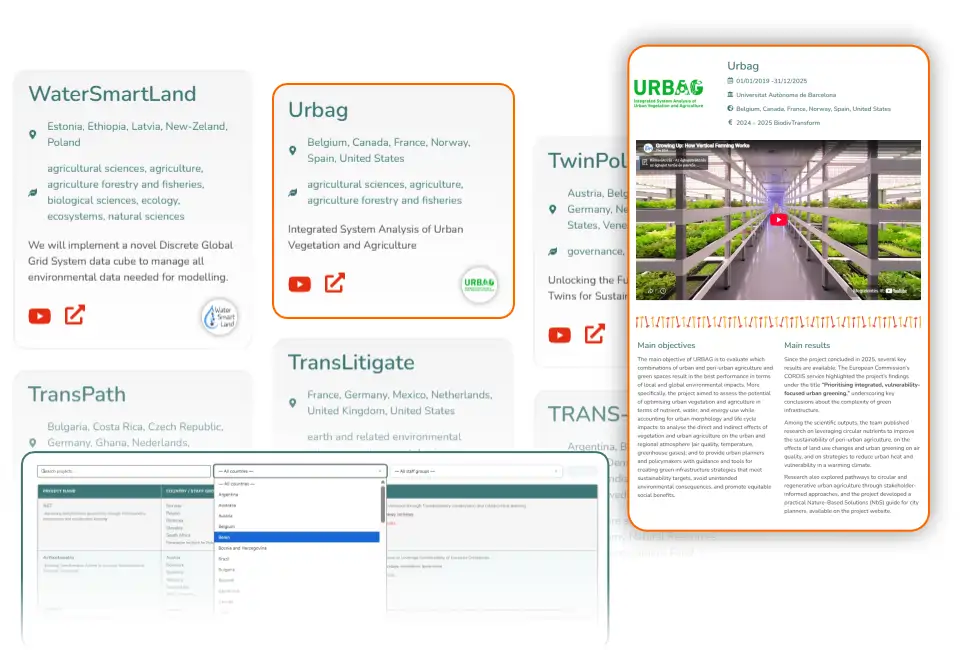
If you’re leading or managing a project working on biodiversity, equity, or systemic transformation in any sector, we’d like to hear about it. Being included means:
- Visibility for your project among researchers, policymakers, and practitioners actively looking for tested approaches to learn from.
- Cross-project connections: DAISY and sister initiatives such as SPARK4B+ already draw on this catalogue to identify best practices and connect people working in similar directions.
- A contribution to the evidence base that informs recommendations to policymakers on what actually enables biodiversity-positive and equitable change.
Submitting is simple. Send us the basics, including the project name, country or target group, duration, and a short description of the intervention or interventions involved, by writing to [email protected]. If you know of other projects that deserve a place in the catalogue, forward this post to the people running them too.
A Living Resource, Not a Finished One
The catalogue will keep growing for as long as new initiatives continue to emerge, which, if the people reading this are any indication, will be a while yet. Explore what’s already there, borrow what’s useful for your own project design, and if your work belongs in the mix, let us know.