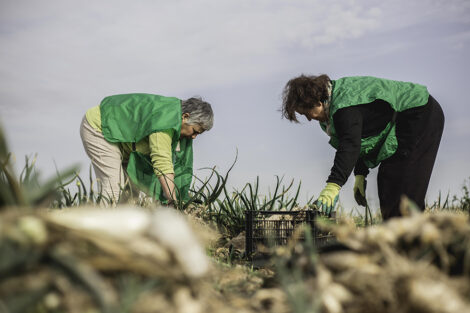
Fundació Espigoladors – Gleaning for Food Recovery and Social Inclusion
A Spanish social enterprise gleans surplus fruit and vegetables from farms, turning market rejects into food, jobs and training for people at risk of exclusion.
A Spanish social enterprise gleans surplus fruit and vegetables from farms, turning market rejects into food, jobs and training for people at risk of exclusion.
Turns satellite and AI data into practical intelligence supporting EU policy on ecosystems, water, cities and energy.
Works with farmers across five regions to co-design and test practical biodiversity restoration methods for farmland.
Develops resilient, high-protein European crop varieties to reduce reliance on imported soybean for animal feed.
Studies Europe’s grasslands to develop tools helping farmers manage them for both food and environmental benefits.
Builds a tiered, next-generation network combining genetics, satellites and field data to track biodiversity across Europe.
Develops digital tools to make small-scale and recreational fishing more transparent and sustainably managed.
Studies how to make farming a more attractive career and builds tools to help more young people enter the profession.
Builds partnerships to strengthen bioeconomy research and innovation in Central and Eastern Europe and neighbouring countries.
Builds an AI-powered training system to help farmers, advisors and rural workers gain the skills needed for the future.

